Books & Shows - First Half of 2026
Since I don't watch a lot of TV shows, I've decided to lump them in with the books I've read and muse on both.
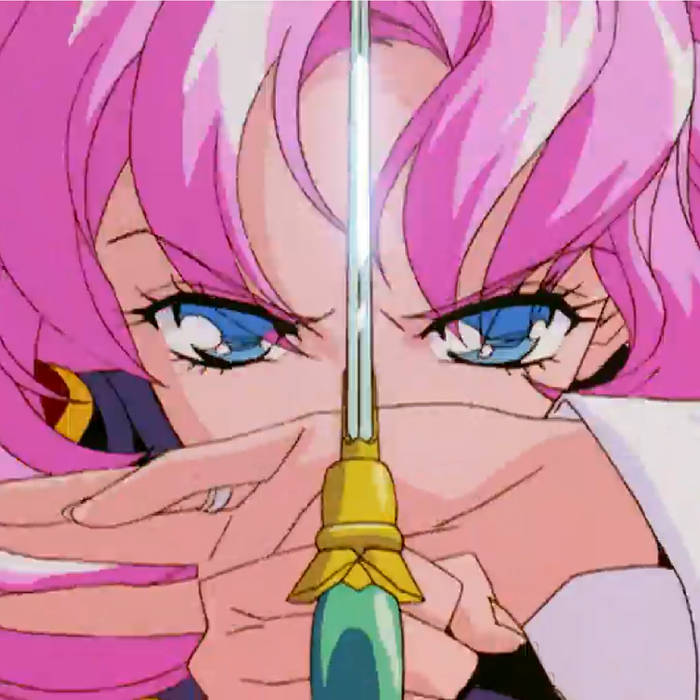 Revolutionary Girl Utena - This is what I was watching already from the end of the year and into the start of the year. I took time out from my books so I could watch more of it, and my ultimate conclusion is that it is... fine. It is an extremely repetitive and formulaic show; a character's backstory is introduced along with the B-plot, they decide they have to fight Utena over it, action rises until the lengthy sequence climbing towards the castle, and Utena defeats them in a sword duel.
See, I thought Utena would be a romance anime with occasional sword duels, but it is actually a sword duel anime that pays lip service to an ultimately uninteresting romance - if you can even call it that, as they barely even seem to consider one another their beloved.
My main issue with Utena is that Anthy, the second half of this romance, is an uninteresting character that gets almost no development over the course of the series, and that I just cannot see her through Utena's eyes. Utena constantly tries to get close to Anthy but there is nothing there - there are plot reasons as to why, but this means that all of the formulaic episodes are ultimately about everyone else in the show other than Utena and Anthy.
That said, I don't dislike Utena. I think the aesthetics are on point, with bishounen and bishoujo characters all over the place; many of the gags are extremely funny (Nanami is an amazing character); and before they get repetitive, the fights are indeed thrilling and interesting. It's just that none of it can disguise the fact that this is a thirty-nine episode anime that feels like it should have been twenty-four at most, and could have comfortably been twelve.
 Legend of the Galactic Heroes - Having finished with Utena, I still didn't want to pick a book up just yet, so I used that time to watch Legend of the Galactic Heroes, and it might honestly be the best anime I have ever watched (though they aren't many). There are many anime which propose to be "for adults" but what they mean is that there is gore and juvenile sex. Legend of the Galactic Heroes is one of the few anime I could genuinely see someone's father watching.
This is a textured, careful exploration of the politics of democracy and tyranny, very invested in the question of "would the best tyranny be better than the worst democracy?" And the framing does belie some very liberal politics, but that does not get in the way of my enjoyment of just how thoughtful this is. LotGH has ideas and it has thought deeply about them, which is more than many shows can say.
Still, it doesn't let this get in the way of character writing, and it has truly literary ambitions there. There are hundreds of characters, and it does that thing I love where it introduces a minor character that becomes a recurrent character, and before you notice it, they've turned into a major character.
Legend of the Galactic Heroes is the only anime that had me fighting back tears in public when I decided to watch it while on the stationary bike, it truly feels like it will stick with me for a long time.
 The Charwoman's Shadow - Read from March 11 to 21. Had I read Dunsany as a child or teenager, it would have rewired my brain permanently. There are just so many interesting ideas in his books, but most importantly, he strings together sentences with such an eye to beauty and prosody. You can really tell Tolkien took him as a major inspiration because of how mysterious he can make the world.
I quite liked The King of Elfland's Daughter, but I think The Charwoman's Shadow, due to its strong focus on just a few characters, strikes a lot closer to home. It also has the most interesting wizard I've seen in a book, a weird and constant presence who can barely be said to be human anymore.
And so they came to the ridge of the hill and saw the willowy lands. The low sun glittered in their faces, no longer a flashing centre of power avoided by human eyes, but a mystery, an enchantment, almost to be shared by man; and wholly shared by solitary trees, and bands of shrubs, far off on the wild plain, which now drew a mystery about them, as men in the tended fields began to draw their cloaks. They gazed some while in silence at those strange lands, which none saw from any window in Aragona, seeking their mystery, which was almost clear and was coming nearer and nearer, and finding it, but for the tiniest shrubs and shadows amongst which it hid, though barely, its secret enchantment. And as they looked at that strangeness, part spell and part blessing, descending on all those acres out of the evening, not a ripple of laughter shook the calm of their wonder. And then a cold wind blew for only a moment, rising up from its sleep in nowhere and moving to distant sails; and they stirred as the wind went by, and their search was ended.
 Global Crisis: War, Climate Change, & Catastrophe in the Seventeenth Century - Technically began on January, but picked it up seriously after I finished the previous book, finished on March 28. Global Crisis, a Retired Adventurer recommendation, was a fascinating book to read. It proposes to analyse how the climate contributed to the General Crisis of the XVIIth Century, and provides countless statistics and deeply persuasive arguments.
I think what I appreciated the most about the book was its structure. After it lays out the finer details of its thesis, it goes on to examine a series of major cases, from Mughal India to Ming China, Tokugawa Japan, all the way to the colonial empires of Habsburg Spain and the New World, providing interesting tidbits for all of these. It cements the XVIIth century as one of the most interesting (and awful) periods in human history in my mind. It would make a great companion to Joel F. Harris' The Faithful Executioner: Life and Death, Honor and Shame in the Turbulent Sixteenth Century, which partly dealt with how Germany got to where it was in the timeframe of this book, but zoomed in.
It is possible to demonstrate the extraordinary intensity of the four Edo fires of the mid-seventeenth century. A ‘core’ of earth excavated in 1975 at a building site in Hitotsubashi, not far from the shogun's castle, revealed three prominent layers of ash. The most recent, representing the firestorm caused by the bombing of Tokyo in 1945, measured 4 inches; the second, caused by the fire that followed the Kanto earthquake of 1923, measured 6 inches; the third, representing the fires of the mid-seventeenth century, measured 8 inches. The fact that the burned debris from 1657–68 was twice as thick as that created by the most advanced pyrotechnics of the twentieth century is both striking and sobering.
 The Diamond as Big as the Ritz - Read on March 29. A short story by F. Scott Fitzgerald, the first I read of his, but very good. Very plot-driven, and thus very different from what I know him for (Gatsby, mostly), but quite gripping. The mixing of his relatively direct yet ornate language with the straightforward story makes the experience of reading this akin to a really good movie.
 The Buried Giant - Read from March 30 to April 8, recommended by Nathan. The most unconventional Arthurian book I've ever read by far, in large part because it takes place after Arthur's time and engages surprisingly deeply with the Saxon wars of the early Arthur reign - typically omitted, skipped, or abridged in pretty much everything since Geoffrey of Monmouth.
It is also unconventional for having an elderly couple as their protagonists, already unusual for Fantasy, but also dealing with their relationship and love of one another very seriously. Overall it did not strike me as emotionally as I expected it would, but it is very well written, nicely episodic, and paints a really interesting fantasy world just at the edges of your vision, without letting that get in the way of its exploration of memory.
Also, and this is not really the focus of the book, I appreciated how it contrasted the Saxon ideals of heroism like the ones you'd find in Beowulf with the later Arthurian ones, mainly through the character of Wistan.
 As Barbas do Imperador (The Beard of the Emperor) - Read from April 9 to 30. One of the most fascinating non-fiction books I've ever read, going over the reign of D. Peter II, 2nd emperor of Brasil (and virtually only one, considering Peter I ruled for a measly 9 years and was much more invested in Portugal), but in particular through the lens of how exactly Peter II moulded his image and effectively rewired the nation for the purposes of nation building.
I could go on all day about this book and how it changed how I see Brazilian history. Peter II is often portrayed as the kindly grandfather of Brasil, a steely-eyed, white-bearded philosopher-king who was too god for this place, gave his blood for us, and was ingrately repaid with an exile and the promulgation of an authoritarian Republic which perpetrated countless evils.
This image is in tension with the fact that he oversaw the longest period of independent Brazilian slavery, ignored the rest of the country in favour of Rio de Janeiro (the imperial province), dumped rivers of taxpayer money on things as varied as building a city atop a mountain or buying singing slaves, etc. But the intriguing part of the book is how it goes into just how much of his image is calculated. That photograph on the cover, which most Brazilians have seen even if they can't name him? That was distributed for free by the crown for the purposes of propaganda. His image as a scholar papers over how he would fall asleep in the meetings, often mocked as a "parrot emperor" who could only repeat what the last smart person had said to him; his image as a lover of the arts coming about in large part because he sponsored poets to write nationalistic literature to garner legitimacy, etc.
It also goes into just how strange the Republican coup was, and how much the Republicans did not really expect to win, featuring things as sending letters to aristocrats to tell them the aristocracy would be abolished, yet still referring to them by their ducal titles, among other contradictions. Amazing book.
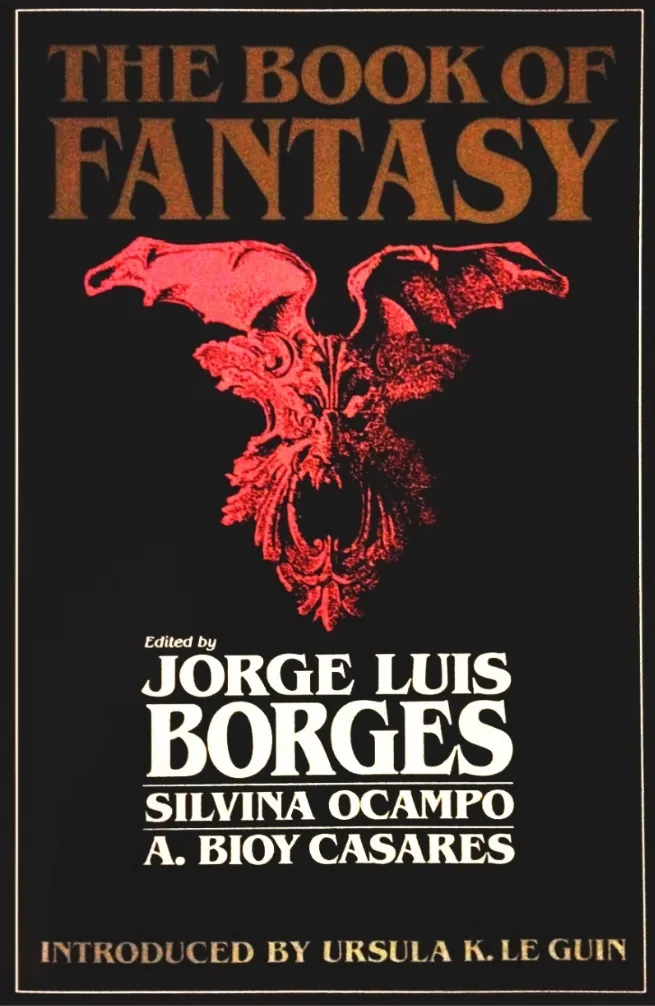 Assorted short stories from the Book of Fantasy - I read Sennin (by Ryunosuke Akutagawa) and Ben-Tobith (Leonid Andreyev) on May 13, and then reread Tlön, Uqbar, Orbis Tertius (Jorge Luis Borges) on June 2nd. I enjoyed all of these though do not have very much to say about them. Sennin is a short, almost fairy-tale like story; Ben-Tobith probably hit the hardest, the quote below comes from it; and Tlön, Uqbar, Orbis Tertius finally sank in for me - the other quote below comes from it. I think I had read it when I was way too young and could not really appreciate Borges' writing or what he was doing with it, and honestly it is still quite esoteric, but I appreciate it more now.
The sun, condemned to shed its light upon the world on that dread day, had already set beyond the distant knolls, and a ruddy scarlet streak was glowing like a bloodstain in the west. Against this background the crosses showed dark and indistinct, while some figures glimmered vague and white as they knelt at the foot of the central cross.
In the Islamic world, there is one night, called the Night of Nights, on which the secret gates of the sky open wide and the water in the water jugs tastes sweeter; if those gates were to open, I would not feel what I felt that afternoon.
 The Aeneid (McGill & Wright translation) - Read from May 3 to 19. There is much to enjoy about the Aeneid (I cannot comment on the translation as this is my first time reading it), but I can't help but find it lesser than The Odyssey and The Iliad. At its best, The Aeneid builds such powerful imagery that I can see why it resonated over the centuries - the strongest of which being Pious Aeneas carrying his father Anchises and the gods of Troy on his back - but way too much of it seems lost in the weeds of Ancient Roman imagery and exaltation, to the point where it almost becomes hard to follow.
See, my issue is not that The Aeneid is Roman propaganda - I read plenty of books that are modern American propaganda just fine, so ancient imperialist propaganda doesn't even move the needle there - but rather that it can be way too sloppy about it. There are many passages in there where someone just recites to Aeneas events he doesn't know about and doesn't understand, and it makes me wonder if the ancient Romans felt as bored by it as I did.
There's also a surprising amount of horror there, from a modern perspective. While the gods were present in the Homeric poems, in The Aeneid they almost carry Aeneas and his people. They are being dragged kicking and screaming towards a horrible, violent war for the sake of the greatness of a city none of them will see built. Aeneas gets visions of an empire he cannot even conceive of, fighting enemies and doing things he can't understand, yet he knows he must suffer and bear through it all because the gods says so. If Achilles' heroic characteristic is his battle prowess, and Odysseus' is his craftiness, then Aeneas' is his nigh-blind servileness towards the gods and to always put the good of the people of a future Rome above his or his people's. It reads to me as very sad - it even ends with a horrifying image, Aeneas transfigured by rage, alone on the battlefield, having killed Turnus after he begged for mercy; not a man anymore, but a perfect symbol of a ravaging empire.
 The Swords of Lankhmar - Read from May 20 to 31. I was very pleasantly surprised by this! I never have high expectations for Sword & Sorcery - I do not usually care very much for action scenes, extended descriptions of hot babes, or the more picaresque vibe it tends to go for - but Swords of Lankhmar is so tight and light-hearted that I couldn't help but feel like I was reading Captain Blood again.
I think the most surprising feature for me, which not a single person who mentioned it to me deigned to bring up, is how strongly Fritz Leiber's writing style resembles Terry Pratchett's. Of course it does, Fafhrd and the Grey Mouser are basically the first point of view of Discworld, Ankh Morpork is deeply Lankhmarish, etc, but I had not expected the book to be this well plotted or this funny. It straddles the line perfectly between being just serious enough to have riveting stakes, but just funny enough to not have them be too sad or affecting; and that line is where swashbuckling lives. I look forward to reading more of their adventures, probably as palate cleansers between other books.
 Oathbreakers: The War of Brothers That Shattered an Empire and Made Medieval Europe – How Charlemagne's Dynasty Fell and Why It Matters for Understanding Political Collapse - Read from June 9 to 26. A deeply interesting look on the succession of Louis the Pious and how the Carolingians fell, like the paragraph-long title says.
This is non-fiction but it is not aimed at scholarly audiences, and I appreciate it for that. I used to think that, to get accurate and up to date scholarship, I had to read only what a proper historian would read, but books like these are the reason why that notion is nonsense. These things aren't opposed, historians already know the story of Charles the Bald, Louis the German, and Emperor Lothar, they have written their theses on a single minute of the life of each of these men, but it takes a separate skill to communicate the intricacies of that to a lay audience.
I think my biggest takeaway from this book is that, even though I already knew how intellectual the Franks were, they were far more than I anticipated. I still held a little bit of the idea of the Franks as "the barbarians what killed the Romans and started dressing like them", but that is a crude way of thinking about them. Charlemagne and his successors were very literate, very ritualistic, and very intelligent people who cautiously wrote their own propaganda in fascinating ways.
Unfinished and the future
The only book I abandoned this year was The Lusiads, on June 3rd. It is the seminal work of the Portuguese language, an epic poem about the journey of Vasco da Gama to India, and it is very boring to read. Where Homer used ekphrasis to conjure up beautiful images, Camões does so for such an extremely literate audience that I just cannot keep up with it. He uses words I don't understand, makes oblique references to obscure works, and in general seems to prioritise utter confusion and complication over any other element of the poem. I feel slightly bad to leave such an important work half-read, but I refuse to read something just because it is important.
I have also slowly been making my way through Idylls of the King, another Nathan recommendation, and might pick up Charlemagne's Mustache: And Other Cultural Clusters of a Dark Age after I'm done with it, and Gormenghast after that; Weird Writer's post has made me want to read it. Then again, it's been a long time since I last read a XIXth century book about young people having kissing fits or adults getting into complex-yet-mundane issues, so we'll see how long I can last before I pick up another Austen, Dickens, or Tolstoy.
On the TV show front, I've been watching Yu Yu Hakusho and enjoying it. I was watching Ɐ Gundam, and enjoying it, but it got away from me a bit.
See you at the end of the year!