The Arden Vul Weasels - Session 2
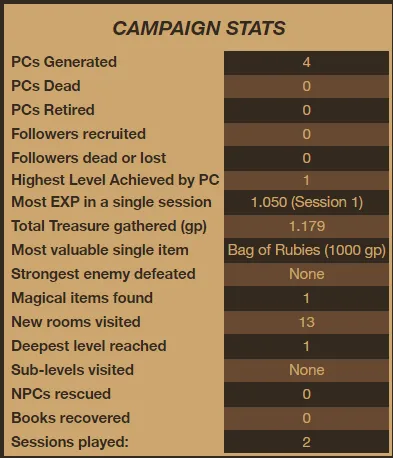
Weird Writer has written another great recap so you can read that one for contextualise the session, I'll just put my thoughts here.
As she says, we had no fights in 2 sessions, and the more we go, the more anxious I get about the borderline freeform I'm doing and how I'll rule combat. Specifically, I get worried about the numbers of enemies, as Arden Vul has quite a few encounters which are "about 12 giant centipedes" and "about 17 giant bats", so I get worried about the following things, and I'll follow them up with counter-arguments for my anxiety:
Auto-hit. It just makes sense that someone in armour could get hit in the arms and legs, but the enemies might not know this, so how exactly should I go about ruling where the enemies are attacking in the event of a swarm? Because in D&D we can follow the rubric of about 3 medium enemies attacking from one side, 6 small, or 1 large (such as a mounted man), and then roll all of their attacks to see what hits, but with this I'm not so sure.
- The counter is that this should be contextually obvious. The giant centipedes crawl on the ground, they will try to climb over your legs; the bats swoop from above, if you put your shield in front there is no reasonable way for them to get at your arms, and the ones going under it will hit your hauberk. By the rules I have, "the enemy might hit you" works as a potential peril to an attack or action, not as an exchange where both figures are stopped and taking turns, so I have to keep this in mind.
I might have calculated them having too much HP, as I calculated how many Hits they can take based on AD&D, except I didn't account for the fact that, in AD&D, hits and damage are variable, so a monster with 3 HD by my rules can take about 5 Hits, but that's because in AD&D they would be rolling 3d8, while the players could eventually be dealing way more than 1d8 damage because of strength modifiers and such.
- I don't have a strong counter-argument for this one besides "it just hasn't been tested yet so chill the fuck out". It might actually be way too many hits, and I wouldn't want to reinvent an auto-hit Odd-like by accident, so if fights end up taking too long I'll calibrate appropriately.
A subsidiary worry to the one above is the effect of magical weapons. A +1 sword in D&D is useful as it raises both damage and to-hit, but when to-hit is relegated to "whenever contextually appropriate" and damage is a bit different, it makes it a difficult balance to strike on what would be the difference between a cut from a sword and a cut from a sword +1.
- This one's easy: magical weapons are already good without the +1 because they let you hit things they wouldn't otherwise. If they work more specifically, like "gives +3 against giants", then I can just dole out an extra hit against such monsters, and it balances out against their big HPs.
Saving Throws worry me, because the way we're doing right now is a simple roll-off against 2d6 and whoever wins gets freed from the effect. The issue there being that in D&D you get better at resisting stuff as your level increases, while here this wouldn't be the case, and I'm afraid I end up nerfing the players by accident.
- Not necessarily an issue either, as this can be calibrated on the spot by feel. I do prefer to have this stuff codified, but I figure it's fine if they have a relatively static "Save" that only improves by context, it makes them better at resisting in the early levels and a bit worse in the late ones, but by then they should have other defences. Besides, I'm not that worried about being extremely faithful to AD&D on that level, and that applies to the above points too. It's harder at points and easier at others, it evens out.
Those are my main "uh oh" points but as you can see, I think they all stem from the issue that we just haven't gotten to that point yet and it makes me worried. I ultimately think they won't be very difficult to solve at all in play, as I can always set risks other than "they deal damage" - after all, if you raise your shield to protect yourself from a bunch of bats, they won't try to beat their heads against the shield, they'll try to remove it from your damn arm. I think fights with many enemies might not be much shorter than in D&D but I doubt they'll be any longer, particularly because I won't have to be counting HP.
One of my big concerns, which was subject to a long conversation with Mann and others a little while ago, was that of the long monster descriptions and having to convert them to my little system on the spot, which Mann suggested having a little list of premade archetypes I could fit monsters into as I went.
However, as I got ready to run a monster I had never seen before today - a Carcass Crawler - I read its stat block very fast and had no issue mentally converting it to my own procedure. Really the only thing I need to convert is the HP and figure out what its attacks and damage do, and that is surprisingly easy to do on the fly.
Or, I shouldn't say "surprising", I built the system for that purpose, but I should have more faith in my capacity for that sort of quick adjudication. I think the archetypes are good in case I'm caught flat-footed, such as in the more densely crowded areas, but I'll strive to first to a quick conversion on the spot and see how that goes.
As to the players, they're meticulous and cool and the sessions feel very chill. As I've already read all levels down to 3-ish I'm not really caught by surprise at this point with anywhere they want or can get to, so I'm broadly fine prep-wise. Arden Vul is a deep, complex, and winding mine, but we extract its ore like in any other one: chipping away with the pickaxe one strike at a time.